

 Feed back
 Privacy Policy
You're late for work. Coffee in hand. Leash clipped. You open the front door, and within three seconds, your golden retriever transforms into a 70-pound rocket sled, dragging you toward the neighbor's mailbox like it holds the secrets of the universe. You yank, you plead, you sigh. He doesn't listen. Sound familiar?
By 2025, millions of American dog owners have stopped asking, "Why won't my dog obey?" and started asking, "What is my dog trying to tell me?" The answer, backed by neuroscience, behavioral psychology, and real-world results, lies not in dominance or punishment—but in positive reinforcement dog training. This isn't just a trend; it's a paradigm shift reshaping how we raise, train, and live with dogs across the United States.
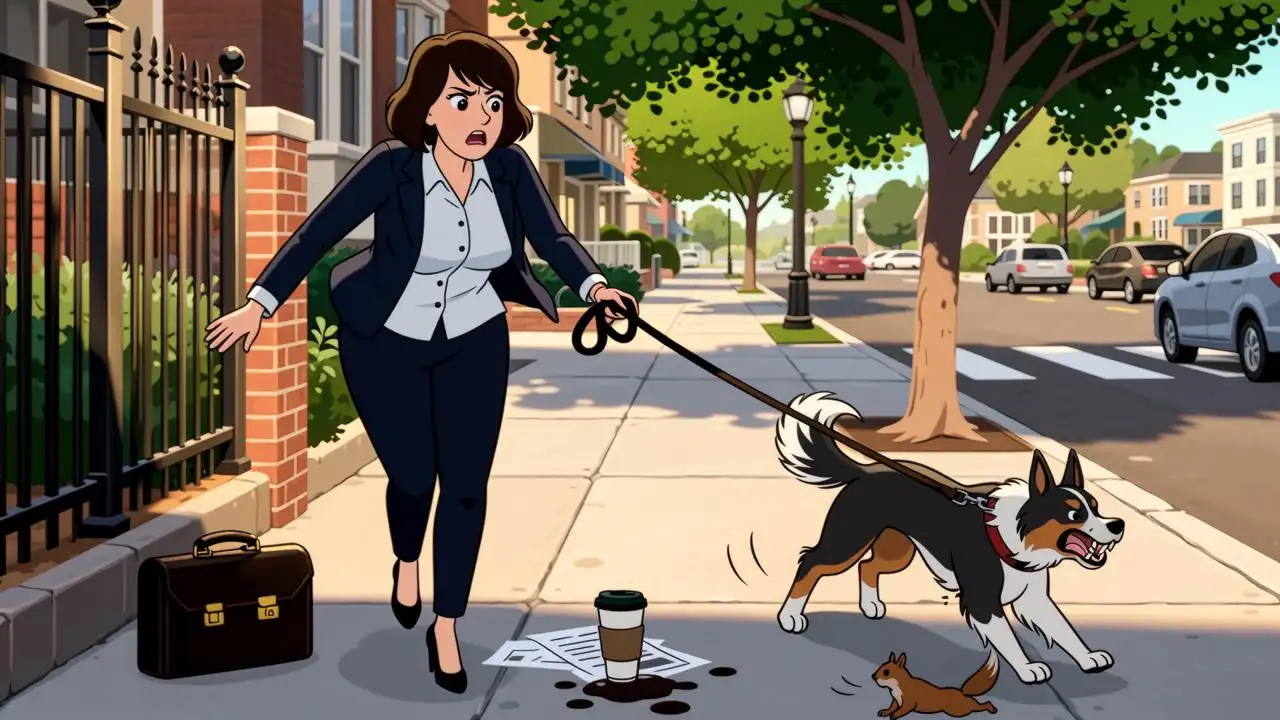
Meet Sarah Thompson from Austin, Texas. In early 2024, her two-year-old border collie mix, Luna, made every walk feel like a tug-of-war. Pulling, barking at bikes, lunging at squirrels—Sarah felt embarrassed, exhausted, and disconnected from her dog. She tried tightening the collar, saying "No!" firmly, even jerking the leash. Nothing worked long-term. In fact, Luna started trembling during walks.
Then Sarah discovered a local trainer specializing in positive reinforcement techniques. Instead of correcting what Luna did wrong, they focused on what she could do right. They used high-value treats (freeze-dried liver), a calm voice, and immediate rewards when Luna walked beside her without tension. Within weeks, Luna wasn't just walking nicely—she was checking in, making eye contact, and choosing to stay close.
What changed? Not the dog. The method.
This story isn't unique. According to a 2024 national survey by the American Veterinary Society of Animal Behavior (AVSAB), over 68% of dog owners who switched to reward-based dog training reported significant improvements in obedience and emotional well-being within 60 days. Compare that to only 32% improvement among those using aversive techniques—and a staggering 41% increase in fear-related aggression.
Here's a mind-blowing fact: When your dog sits because you said "Sit," that's obedience. But when your dog sits before you even ask, hoping for a treat—that's engagement. And that shift—from compliance to collaboration—is exactly what positive reinforcement training fosters.
In 2025, brain imaging studies on dogs conducted at Emory University reveal something remarkable: When dogs receive praise or treats after performing a task correctly, their caudate nucleus—the brain region associated with pleasure and anticipation—lights up similarly to humans receiving rewards. Essentially, your dog doesn't just tolerate training; they enjoy it.
Think of it like this: Traditional punishment-based training is like working for a boss who only notices mistakes. You dread showing up. But reward-based training is like working for a manager who celebrates small wins. You feel seen, motivated, and eager to perform.
And here's where timing matters. A 2023 study published in Applied Animal Behaviour Science found that rewards delivered within 0.5 to 2 seconds of a desired behavior were up to 70% more effective than delayed rewards. That's why tools like clickers have become essential—they bridge the gap between action and reward with millisecond precision.
Imagine teaching a dolphin to jump through a hoop... without speaking its language. That was the challenge marine biologists faced in the 1940s—until they invented marker training. A whistle or sound would "mark" the exact moment the animal did something right, followed quickly by a fish. Precision + reward = learning.
Fast forward to today, and that same principle powers clicker training for dogs in American homes and schools. The click—a sharp, consistent sound—acts as a "time-stamp" for good behavior. It tells the dog: Yes! That exact thing you just did—do more of that.
Take the case of Marcus Lee in Denver, whose rescue pit bull, Duke, had severe separation anxiety. Duke would destroy furniture, bark for hours, and panic when left alone. Traditional advice failed. Then Marcus attended a virtual workshop on positive reinforcement techniques using clicker conditioning.
Step 1: Click and treat when Duke looked at his bed.
Step 2: Click and treat when he took a step toward it.
Step 3: Gradually build duration, clicking only after longer stays.
Within six weeks, Duke would go lie down calmly before Marcus even picked up his keys. The transformation wasn't magic—it was mechanics. Each click created a tiny neural pathway reinforcing calmness. Over time, those pathways became highways.
According to the Association of Professional Dog Trainers (APDT), clicker training methods usage among certified trainers in the U.S. rose from 41% in 2020 to 67% in 2025. Why? Because it works—even with complex behaviors like scent detection, therapy tasks, and emotional regulation.
Now, here's a common misconception: People think positive reinforcement means stuffing dogs with treats all day. Not true. The treat is temporary. The goal is to fade rewards gradually and replace them with life rewards—like going outside, playing fetch, or getting petted.
But the timing of the initial reward? That's non-negotiable.
Consider this analogy: You're learning to play piano. You hit the right note, but your teacher waits five seconds before saying "Good job." By then, you've already moved on. Did you even know which note earned the praise?
Dogs face the same confusion. That's why the clicker is so powerful—it cuts through the noise. Whether you're teaching "sit," "stay," or "leave it," the click pinpoints the behavior instantly. Then comes the treat.
Trainers call this the ABCs of learning: Antecedent (cue), Behavior (action), Consequence (reward). Get the consequence right, and the loop closes perfectly.
And in 2025, technology is helping. Apps like TrainFetch and ClickTrack now offer audio clickers synced with treat dispensers via Bluetooth. Some smart collars even vibrate gently to signal correct behavior—ideal for hearing-impaired dogs.
It's not just pet owners benefiting. Across the U.S., animal shelters are adopting positive reinforcement training programs to rehabilitate fearful or aggressive dogs. At the Humane Society of Utah, a program called "Second Chance Canines" uses reward-based methods to prepare shelter dogs for adoption. Result? A 52% drop in return rates since 2022.
Service dog organizations like Canine Companions and Paws With A Cause have also shifted entirely to positive reinforcement models. These dogs must perform complex tasks under stress—opening doors, alerting to seizures, providing balance support. Punishment-based training creates hesitation. Reward-based training builds confidence.
Even public schools using therapy dogs report better outcomes when handlers use clicker training techniques. Kids with autism spectrum disorder respond more readily to dogs trained with kindness than those exhibiting signs of stress from harsh corrections.
And let's talk cost. While some argue that professional dog training programs are expensive, the long-term savings are undeniable. The ASPCA estimates that behavior-related issues account for nearly 40% of dog surrenders. Effective positive reinforcement reduces vet visits (fewer injuries from pulling), prevents property damage, and strengthens bonds—saving families thousands in rehoming or medical costs.

If you're new to this approach, here are three practical steps to begin in 2025:
Remember: Mistakes are part of learning—for both of you. If your dog doesn't respond, don't scold. Ask: Was the cue clear? Was the reward motivating enough? Did I reward too late?
Q: Are shock collars still legal in the US?
A: Yes, but with growing restrictions. As of 2025, 14 states—including California, New Jersey, and Illinois—have banned or heavily regulated electronic collars for general use. Major veterinary associations strongly oppose their use due to risks of fear, aggression, and trauma.
Q: Can older dogs learn positive reinforcement methods?
A: Absolutely. Age doesn't limit learning. In fact, senior dogs often excel because they're calmer and more focused. The key is adjusting pace and managing any physical limitations (e.g., arthritis).
Q: What if my dog isn't food-motivated?
A: Food is common, but not mandatory. Some dogs prefer play, petting, or freedom (e.g., being released to chase a ball). The rule: whatever your dog works for is their reinforcer. Experiment to find their currency.
[Disclaimer] The content about Positive Reinforcement Dog Training Methods in the US provided herein is for informational purposes only and does not constitute professional advice in any related field. Readers should exercise caution and consult qualified professionals before making any decisions based on this content. The author and publisher disclaim any responsibility for actions taken based on the information provided.
Emma Walker
|
2025.10.30
