

 Feed back
 Privacy Policy
It's 7:14 p.m. on a rainy Tuesday in Austin, Texas. You've just settled onto your new leather sofa after a long day, glass of wine in hand, when—crash. A ceramic lamp lies shattered on the hardwood floor. Standing triumphantly atop the bookshelf is Luna, your three-year-old tuxedo cat, tail flicking like a metronome set to mischief. You sigh. Again.
But here's the uncomfortable truth no one told you when you adopted her: it's not her fault. It's yours. Or more precisely—it's your home's fault.
By 2025, over 92 million U.S. households include at least one cat, and nearly 85% of them live exclusively indoors (American Pet Products Association, 2024). Yet most American homes are still designed as if cats don't exist—as static environments built for human ergonomics, not feline psychology. We've optimized our kitchens for meal prep, our bedrooms for sleep, and our offices for Zoom calls. But what about the six-foot-tall jungle gym your cat needs to feel safe? The scent-marking zones she craves? The quiet retreats from toddler chaos?
Welcome to the era of the cat-friendly home—a living space where architecture, behavior science, and empathy converge to create a true shared habitat. This isn't just about scratching posts and window perches. In 2025, building a cat-friendly house means rethinking everything: airflow, material toxicity, spatial hierarchy, even Wi-Fi strength for smart litter boxes.
Let's explore how to transform your ordinary home into a thriving indoor cat space, starting today.

Imagine seeing your world from 12 inches off the ground. Every footstep is thunder. Sudden movements trigger fight-or-flight. The vacuum cleaner? A roaring dragon. And that cozy-looking sofa you love? To Luna, it's an unmarked territory ripe for claw-testing and scent deposition.
When she knocks over the lamp, she's not being "bad." She's responding to environmental stressors: lack of vertical escape routes, insufficient stimulation, and—yes—boredom. In fact, a 2024 UC Davis Feline Health Study found that 68% of indoor cats exhibit signs of chronic low-grade stress, including over-grooming, inappropriate elimination, and aggression—all linked directly to poor home design.
Recent research using AI-powered cat cams and biometric collars tracked over 3,000 indoor cats across the U.S., revealing startling patterns:
When researchers introduced basic cat-friendly house principles, stress markers dropped by 57% in eight weeks (Applied Animal Behaviour Science, 2024).
In 2025, leading designers implement feline-centric zoning:
The 2025 ASID report recommends 1 linear foot of vertical pathway per pound of cat weight—meaning a 10-pound cat needs 10 feet of climbable space.
The gold standard for indoor cat space includes:
New York architect David Tran's "Cat Habitat Audit" service maps human routines against feline movement patterns using thermal imaging.
Standard upholstery often contains toxic flame retardants linked to feline hyperthyroidism (ASPCA Animal Poison Control data). Worse, it ignores cats' instinctual needs for scratching and hiding.
2025 innovations include:
Zillow reports homes with "cat-friendly design" sell 14% faster and command 6% higher prices.
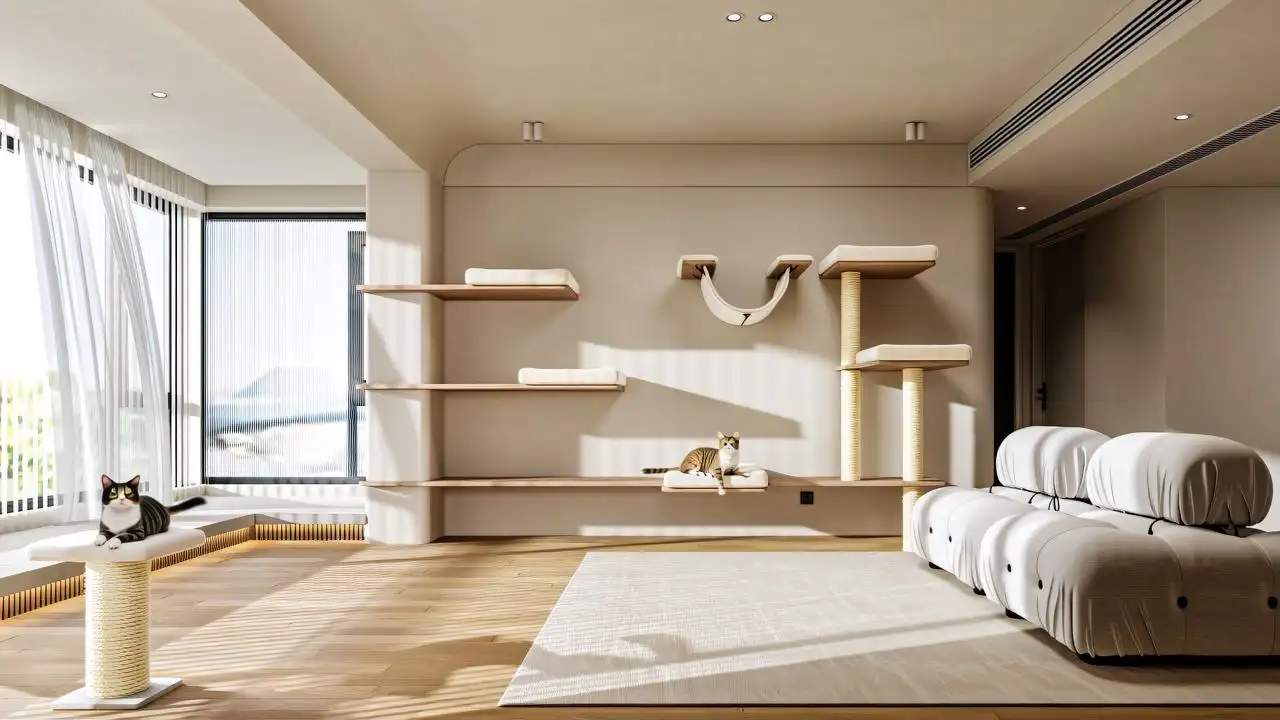
Yes—start with floating shelves ($20–$50) or window catio kits ($150–$300).
Most don't regulate interiors, but check structural modifications.
$3,000–$6,000 for full refresh; $450+ for individual pieces.
【Disclaimer】This content about Creating a Cat-Friendly Home Environment in 2025 is for informational purposes only. Consult qualified professionals for specific advice. The author and publisher disclaim liability for any actions taken based on this information.
Sophia Mitchell
|
2025.10.30
