

 Feed back
 Privacy Policy
You walk into a municipal shelter in Phoenix on a rainy Tuesday morning in early March 2025. The air hums with barks and anxiety. In the far kennel, a medium-sized mixed breed—part shepherd, part something unknown—presses himself into the back corner, eyes wide, body rigid. He flinches when someone drops a metal bowl. This dog has survived abandonment, maybe abuse, certainly uncertainty. Now he's been adopted. But what happens when he gets home?
Here's the twist: six weeks later, that same dog is curled up in a cozy crate in a suburban living room in Austin, tail giving lazy thumps as his human reads nearby. No pacing. No panic. Just peace.
What changed? It wasn't just love. It was structure. And at the heart of it: the humble crate.
In 2025, we're redefining what humane pet care means—not just feeding and vet visits, but emotional architecture. For millions of adopted dogs across the US, the single most powerful tool in their recovery isn't medication or obedience school. It's crate training a rescue dog done right.
And yes, before you recoil—this isn't about confinement. It's about creating a safe space for dogs who've known too much chaos. When used ethically and intelligently, a crate becomes more than furniture. It becomes psychological shelter.
Let's break down how—and why—to turn this often-misunderstood practice into a cornerstone of your rescue dog's healing journey.

Meet Luna. Rescued from a hoarding situation in rural Ohio in January 2025, she arrived at a foster home with matted fur, fear aggression, and zero house training. Her new human, Sarah, wanted to do everything right. So she left Luna free to roam the apartment, believing freedom equaled kindness.
Night one was rough.
Luna paced for hours. She chewed a hole in the couch. At 3 a.m., she had an accident near the bedroom door—then hid under the dining table, trembling.
Sarah thought she'd failed. But Dr. Amira Chen, a clinical animal behaviorist based in Denver, wasn't surprised. "Without boundaries, anxious dogs don't feel safe," she explained during a 2025 webinar hosted by the American Veterinary Society of Animal Behavior. "Paradoxically, freedom without structure increases stress. What these dogs need isn't open space—it's a den."
That's where the crate comes in.
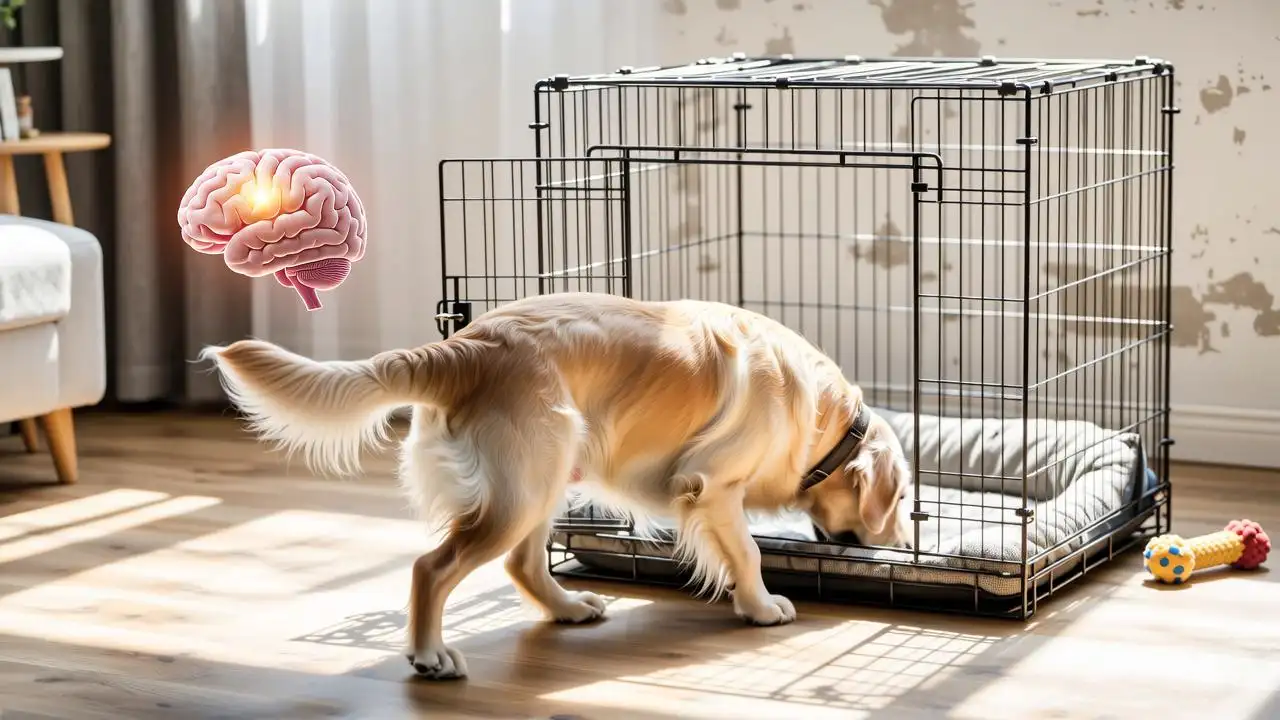
Unlike cages used for transport or punishment, a properly introduced crate mimics the enclosed burrows many canids naturally seek. Think of it like a child's bedroom: a place to retreat, rest, and recharge. For a dog like Luna—who had spent months in a crowded, unpredictable environment—the crate offered predictability.
Sarah reintroduced the crate slowly. Within ten days, Luna was choosing to nap inside with the door open. By week three, she walked in willingly after walks. Today, that same dog sleeps through the night, uses her crate voluntarily during storms, and even carries her toys inside like it's her personal lounge.
The transformation wasn't magic. It was methodical crate training rescue dog protocol applied with patience.
We used to think dogs only liked crates because they were trained to tolerate them. But new neuroscience research in 2025 tells a different story.
At Emory University's Canine Cognitive Neuroscience Lab, fMRI scans of rescued dogs show decreased amygdala activity—our brain's fear center—when dogs rest in confined, covered spaces versus open rooms. In a study published in Animal Cognition Quarterly (Q1 2025), researchers found that 78% of previously traumatized dogs exhibited lower cortisol levels within five days of consistent, positive crate exposure.
"It's not about dominance or control," says lead researcher Dr. Lena Patel. "It's neurobiology. These animals are wired to seek shelter. When we give them a predictable, den-like zone, we're speaking their language."
This aligns with evolutionary biology. Wild canids—from wolves to foxes—raise pups in dens. Domestic dogs retain that instinct. Even puppies raised in homes will often crawl under beds or behind furniture when stressed. The crate, when framed correctly, satisfies that primal need.
But here's the critical distinction: a crate only works if it feels chosen, not forced.
That's why modern crate training rescue dog methods focus on association, not coercion. You're not trapping the dog. You're inviting them into a space where they learn to feel secure.
And in a post-pandemic America where shelter surrenders spiked due to housing instability and economic pressure, this skill is more vital than ever. According to the ASPCA's 2024 National Rehoming Report, nearly 40% of returned adoptions cite "behavioral issues in the first month" as the primary reason. Many of those could be prevented with early environmental structuring—including thoughtful crate use.
So you've brought your rescue dog home. Maybe they're shy. Maybe they bolt at loud noises. Maybe they've never seen a crate before.
Your goal isn't compliance. It's connection.
Here's how to begin building that bridge—without overwhelming their nervous system.
Step 1: Choose the Right Crate
Not all crates are equal. For rescue dog adjustment, opt for:
- Wire crates with fabric covers (allows visibility while providing enclosure)
- Or soft-sided travel crates for ultra-anxious dogs
- Avoid plastic airline carriers unless acclimated gradually
Size matters. The crate should allow your dog to stand, turn, and lie down—but not so large that it loses its den-like intimacy. If needed, partition a bigger crate temporarily.
Step 2: Make It Irresistible (Before Ever Closing the Door)
Leave the crate in a quiet but social area—like the edge of the living room. Toss high-value treats (think freeze-dried liver, cheese cubes) inside throughout the day. Let your dog explore freely.
No luring. No pushing. Just opportunity.
Add a plush bed, a worn t-shirt with your scent, and a stuffed Kong. Make it smell like safety.
Step 3: Name the Space Positively
Use a cheerful phrase every time good things happen near the crate: "Cozy time!" or "Safe spot!" Pair it with meal delivery or toy access.
Never say "Crate!" in anger or urgency. That word must stay neutral—or better, joyful.
Step 4: Close the Door—On Their Terms
Once your dog enters willingly, start closing the door briefly while you're present. Feed them a meal inside with the door closed. Then open it immediately after they finish.
Gradually extend duration: 30 seconds, 2 minutes, 10 minutes—always ending on a calm note.
If your dog paces or whines, you've moved too fast. Backtrack.
Remember: this isn't boot camp. It's trust-building.
Based on protocols from the San Francisco SPCA and updated for 2025 behavioral trends, here's a realistic timeline:
Day 1–2: Neutral Presence
Crate stays open. Treats scattered around and inside. Goal: curiosity, not fear.
Day 3–4: Positive Entry
Toss treats deeper inside. Use verbal cue ("den!"). Begin feeding one meal per day near the entrance.
Day 5: First Meal Inside
Place food bowl just inside threshold. Gradually move it toward the back over meals.
Day 6: Brief Closure
Feed full meal inside, close door, sit quietly for 2–3 minutes. Open, let dog exit freely.
Day 7: Short Solo Time
Close door for 5 minutes while you move to another room. Return calmly, open door, ignore excitement.
By Day 10, aim for 20–30 minute stretches while you're home. Never rush nighttime crating until daytime confidence is solid.
Pro Tip: Use a camera like Furbo or Wyze to monitor behavior remotely. If your dog panics, you'll see it—and know to slow down.
And remember: some dogs take weeks, not days. That's okay. Healing isn't linear.
One client of mine, adopting a senior pit mix from Louisiana hurricane evacuees, didn't close the crate door until Week 4. But once he did? The dog began leading his owner to the crate at bedtime.
Progress, not perfection.
While the crate is a tactical tool, it's part of a broader philosophy: creating environments where trauma survivors—human or canine—can self-regulate.
In 2025, shelters across the US are adopting "Fear-Free Transition" models that include sensory modulation: dim lighting, sound-dampening walls, and yes—personal crates for each dog, even in foster hotels.
These aren't just storage units. They're safe spaces for dogs learning to unlearn fear.
And for adopters, the crate serves another hidden function: it teaches us patience.
When we resist the urge to force affection or demand instant bonding, when we honor a dog's need for solitude, we become better guardians. We stop projecting our guilt or expectations onto them.
The crate becomes a mirror: showing us when to step back, when to wait, when to simply exist nearby without intrusion.
That's the essence of true rescue dog adjustment—not fixing, but accompanying.
Q: Isn't crating cruel? Don't dogs hate being confined?
A: Only if misused. A well-introduced crate is no more cruel than a child's bedroom. The key is choice. Dogs who've been abused may initially fear enclosures—but with positive reinforcement, most come to love them as sanctuaries.
Q: How long can I leave my rescue dog in the crate?
A: Never more than 3–4 hours during the day (except overnight). Puppies need hourly breaks; adults still need potty and stretch time. Crating is not a substitute for exercise or enrichment.
Q: What if my dog whines all night?
A: First, rule out medical needs. Then assess training pace. Most night crying stems from rushing the process. Try placing the crate closer to your bed initially. Respond calmly—don't reinforce panic with attention. If persistent, consult a behaviorist.
In a world increasingly focused on instant results—overnight transformations, viral training hacks—the act of crate training a rescue dog reminds us of a deeper truth: healing takes space. And sometimes, the smallest room in the house holds the biggest gift.
Because when done with empathy, timing, and science-backed patience, crate training a rescue dog isn't about control.
It's about giving them back something they lost: the right to feel safe.
And in 2025, that's not just good training.
It's radical compassion.
[Disclaimer] The content regarding Crate Training a Rescue Dog: A Step-by-Step Guide is for informational purposes only and does not constitute professional advice. Readers should consult qualified experts before making decisions. The author and publisher disclaim liability for any actions taken based on this information.
Olivia Bennett
|
2025.10.30
