

 Feed back
 Privacy Policy
It's December 23rd, 2025. You've spent weeks preparing: the tree is up, the cookies are baked, and your sister just walked through the door with her three kids and a barking golden retriever. Everything feels festive—except for Mr. Whiskers, who vanished the second the doorbell rang. He's now wedged behind the water heater in the basement, pupils wide, tail puffed like a dandelion clock. You call his name softly. He doesn't move. You feel guilty. You feel helpless. And honestly? You're stressed too.
You're not alone. According to a 2024–2025 ASPCA behavioral survey, over 68% of indoor cats in U.S. households show signs of acute stress during family gatherings, especially around Thanksgiving, Christmas, and New Year's. From sudden litter box avoidance to aggressive swatting at well-meaning toddlers, these reactions aren't "bad behavior"—they're survival instincts kicking in. The good news? With a little planning and feline empathy, you can reduce stress for cats during family gatherings and actually enjoy your holidays—with your cat included, if they choose.
Let's explore how.
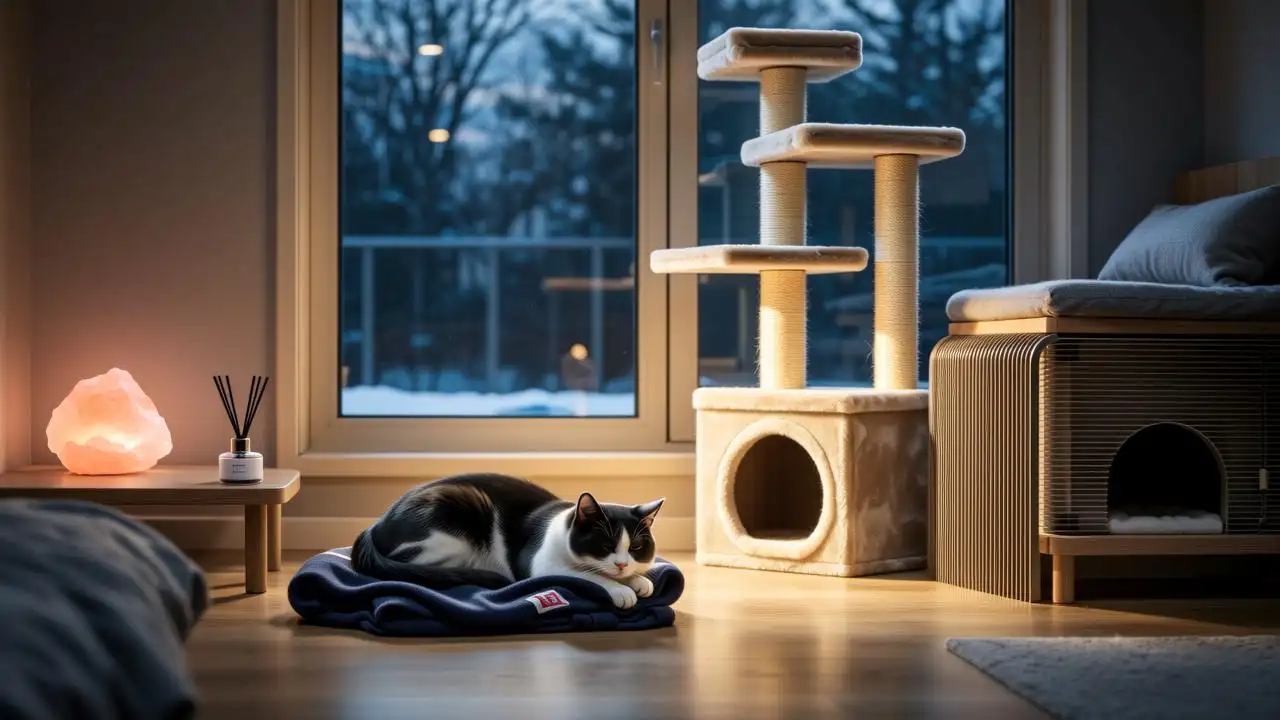
Cats aren't being dramatic. Their panic is real—and biologically wired.
Unlike dogs, who evolved as pack animals and thrive on social interaction, domestic cats descended from solitary hunters. Even after 10,000 years of domestication, their brains still respond to unfamiliar people, loud noises, and disrupted routines as potential threats. In 2025, neuroscience research from UC Davis confirms that when a cat experiences environmental overload—like a house full of strangers laughing, shouting, and stomping—the amygdala (the brain's fear center) fires rapidly, triggering a cascade of cortisol and adrenaline. This isn't "anxiety" in the human sense; it's a primal stress response designed to keep them alive in the wild.
So when Grandma leans down to pet your cat without invitation, or Uncle Joe blasts holiday music at full volume, your cat isn't being "difficult." They're trying not to get eaten.
Meet Luna, a 4-year-old tuxedo cat from Portland, Oregon. Her owner, Sarah, noticed last Christmas that Luna stopped eating, hid for two days straight, and even urinated outside the litter box after a weekend family visit. No one had touched her. No one yelled. So what went wrong?
A veterinary behaviorist reviewed the timeline:
These weren't intentional offenses. But to Luna, each was a red alert.
In 2025, animal behaviorists emphasize that stress in cats is cumulative. It's not one loud noise that breaks the camel's back—it's five small violations happening in rapid succession. Recognizing these hidden triggers is the first step toward promoting calm cat behavior during high-traffic events.
Imagine this: You wake up in your apartment. Suddenly, ten strangers burst in. They rearrange your furniture, play music at max volume, wear strong cologne, and hover near your bedroom door. One tries to hug you while you're mid-bite into breakfast. You can't leave. There's no quiet room. How would you feel?
That's a normal family gathering... from a cat's perspective.
Cats experience the world primarily through scent, sound, and spatial control. Their hearing detects frequencies up to 64 kHz—nearly double that of humans. Their noses contain 200 million olfactory receptors (humans have 5 million). And they rely on predictable territory to feel safe.
When relatives flood the home, they bring dozens of new scents, unpredictable movements, and erratic noise patterns. To a cat, this isn't joy—it's invasion.
A 2025 study published in Applied Animal Behaviour Science found that cats exposed to holiday-level stimuli showed elevated heart rates for up to 72 hours post-event, even if they appeared "calm." This means the damage isn't always visible. Silent stress can lead to long-term issues like chronic cystitis, overgrooming, and weakened immunity.
The takeaway? Reducing stress for cats during family gatherings isn't about spoiling them—it's about respecting their biology.
You don't need to cancel Christmas to protect your cat. But you do need a plan.
The goal isn't to force your cat to "socialize" or act happy. The goal is to minimize stress and provide escape routes so they can self-regulate. Think of it as building a psychological bunker—a place where your cat feels invisible, in control, and safe.
Here's how top veterinarians and feline behaviorists recommend doing it in 2025.
The single most effective tool for reducing stress for cats during family gatherings? A dedicated sanctuary room.
This isn't just "putting the cat in the bedroom." In 2025, the gold standard is the Cat Sanctuary Model: a pre-prepared, fully equipped retreat designed for maximum comfort and minimal sensory intrusion.
Your sanctuary should include:
Bonus: Add a white noise machine or play soft classical music (studies show Bach reduces feline heart rate).
Dr. Rachel Kim, a board-certified veterinary behaviorist in Chicago, advises: "Introduce the sanctuary before the event. Let your cat explore it, nap in it, eat in it. That way, when chaos hits, it's not a prison—it's a familiar refuge."
And yes, it's okay if your cat spends the entire party in there. In fact, that's success.
Even with a safe room, sound and smell can leak through. Here's how to fortify your defense.
Noise Management:
Scent Control:
Pro tip: Spray a guest-free couch or chair with your cat's cheek-rubbed cloth. This anchors their scent in a public zone, helping them feel less displaced.
Remember: calm cat behavior isn't about obedience. It's about environmental harmony.
While emergency tactics help in the moment, the smartest owners think ahead. Because the best time to prepare your cat for next year's holiday isn't December—it's July.
Want your cat to tolerate—or even enjoy—guests? Start training now.
Desensitization works by slowly exposing your cat to stressors at sub-threshold levels, then rewarding calm behavior. Here's a science-backed 3-week protocol used by leading clinics in 2025:
Week 1: Sound Exposure
Week 2: Controlled Visitor Intro
Week 3: Simulated Gathering
By the end, many cats learn that visitors = no threat = possible treats. It's not about forcing interaction. It's about rewriting the fear script.
Technology is revolutionizing anxious cat help.
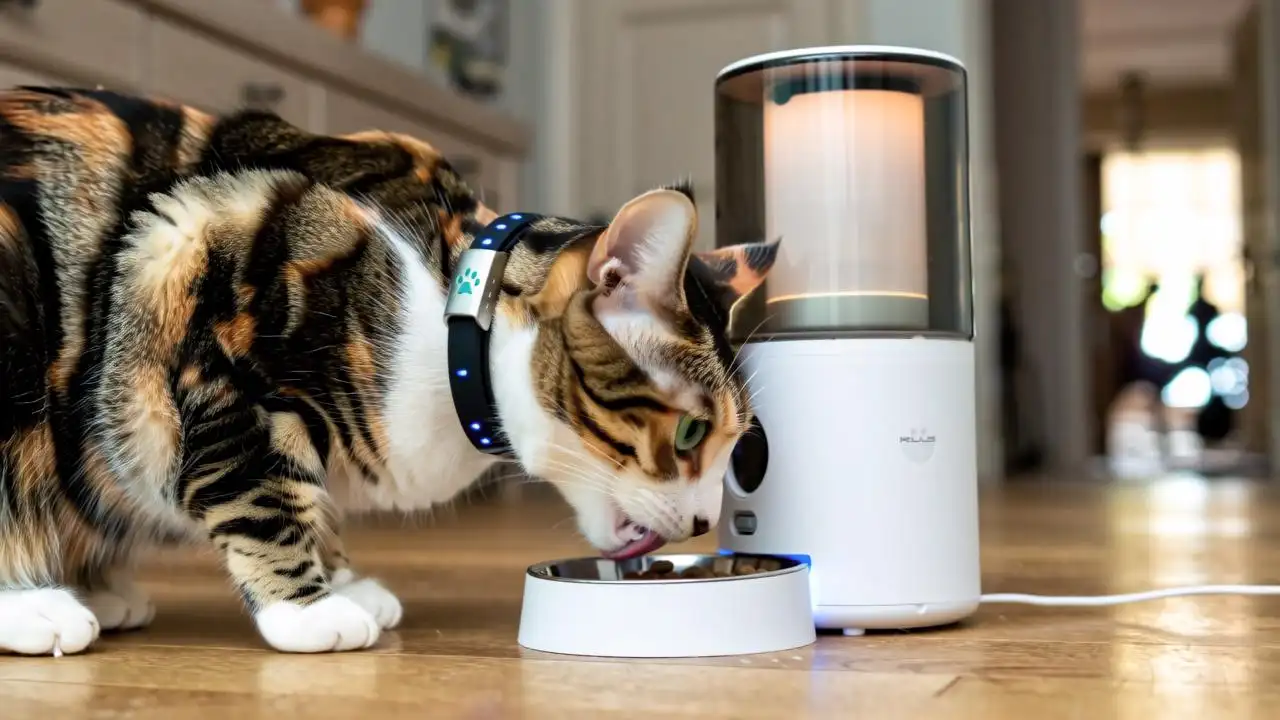
In 2025, wearable trackers like the CatTranq Band monitor heart rate variability, activity, and ear temperature—key indicators of stress. Synced to your phone, it sends alerts when your cat's anxiety spikes, so you can intervene early.
Smart feeders like WhiskerMeals Pro dispense calming treats infused with L-theanine and alpha-casozepine—natural compounds shown to support GABA function in feline brains.
And new multi-modal diffusers combine pheromones, soothing light pulses, and ultrasonic calming tones. Early trials show a 42% reduction in hiding behavior during simulated parties.
But remember: tech enhances care—it doesn't replace empathy. Always pair gadgets with observation. If your cat flattens their ears or thumps their tail, they're telling you something. Listen.
Can I give my cat CBD for stress?
While CBD products are widely available, the FDA hasn't approved them for pets. Some studies show mild benefit, but quality varies wildly. Always consult your vet before use. In 2025, prescription-grade anxiolytics like Reconcile Plus (a chewable fluoxetine variant) are safer and more reliable for severe cases.
Should I keep my cat in another room all day?
Yes—if it's their sanctuary. But never lock them away without resources. And never force them into the crowd. Let them choose. Freedom of movement = reduced stress.
Do calming collars really work?
Some do. In 2025, collars infused with slow-release pheromones (like Sentry HappyCat+) show moderate success in field trials, especially for outdoor exposure. But they're less effective indoors during intense events. Best used in combination with other tools.
Reducing stress for cats during family gatherings isn't about perfection. It's about preparation, patience, and perspective. Your cat doesn't need to be the life of the party. They just need to feel safe.
By creating a haven, managing sensory inputs, and training ahead of time, you're not just surviving the holidays—you're building a home where both humans and cats can thrive.
So this year, when the doorbell rings and the kids come running, take a breath. Check on your cat. Smile. They're probably already curled up in their fortress, dreaming of quiet mornings and tuna treats.
And that? That's calm cat behavior. That's peace.
Happy holidays—from us, and your cat.
[Disclaimer] The content regarding Reducing Stress for Cats During Family Gatherings provided herein is for informational purposes only and does not constitute professional advice. Readers should consult qualified professionals before making decisions based on this information. The author and publisher disclaim any liability arising directly or indirectly from the use of this content.
Dr. Emily Harrison
|
2025.10.30
